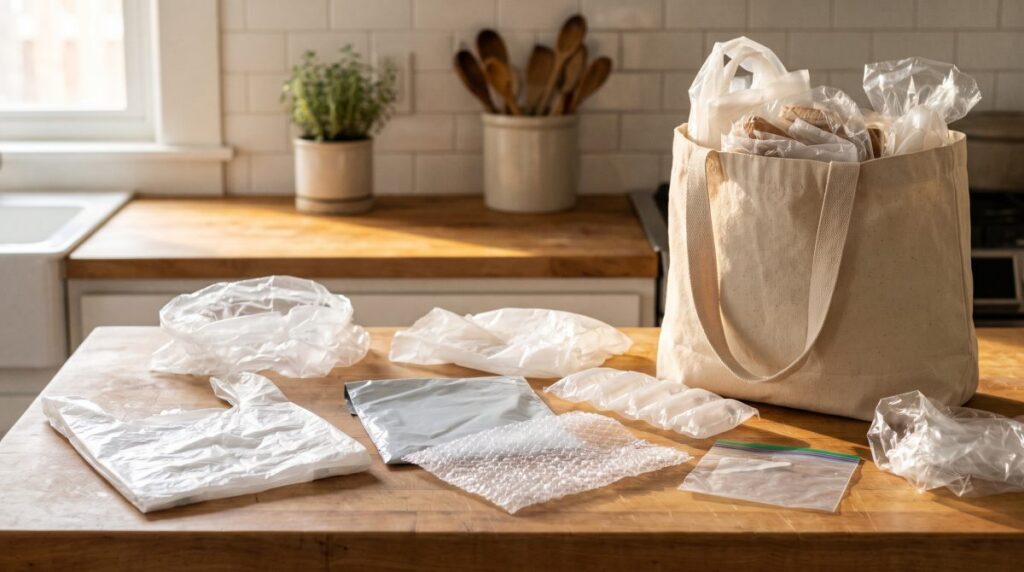
You’re standing in front of your trash can holding a plastic package, trying to decide whether it belongs in the drop-off bin at your grocery store or in the garbage.
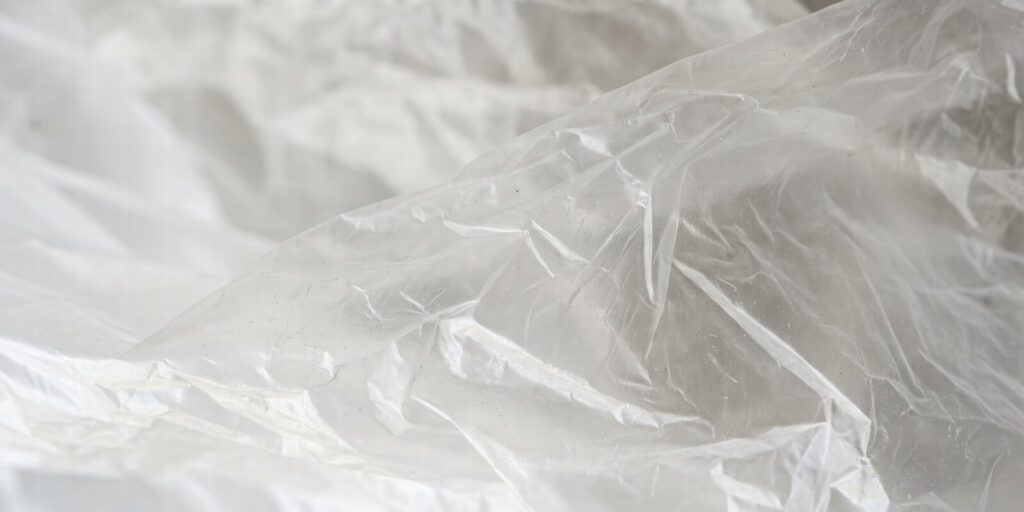
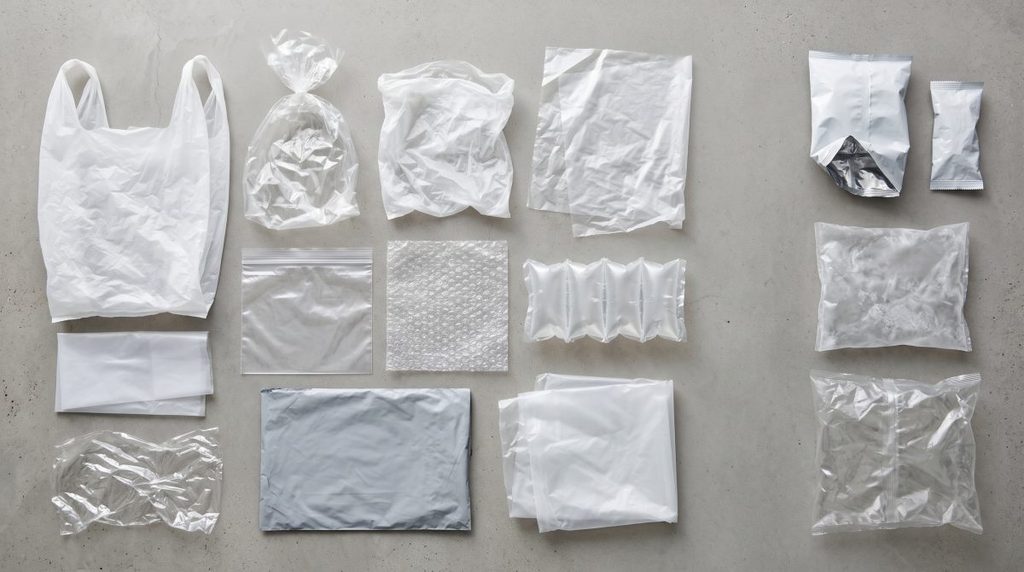
Most recyclable plastic film is made from a single type of plastic called polyethylene. These are the lightweight, stretchy films you already recognize: grocery bags, bread bags, produce bags, dry cleaner bags, and the clear plastic around cases of water. They stretch when you pull them, they feel soft and flexible, and the whole package is made of the same material all the way through. If a package has a small triangle with a #2 or #4 inside, that’s a good sign it belongs in this category.
Not every plastic film fits this description, though. Some packages that look similar on the outside have extra layers added to them, like a thin barrier that keeps food fresh or a shiny metallic lining. Those extra layers are what make the package less likely to be recyclable through most film programs, even if the main material is polyethylene. A grocery bag marked #4 is typically recyclable at store drop-off. A deli meat pouch marked #4 usually is not, because the pouch has a hidden barrier layer the recycling equipment can’t separate.
What the Number on Your Package Tells You
The small triangle with a number on your packaging is called a resin identification code. It identifies the main plastic in the item. For flexible film, #2 (high-density polyethylene, or HDPE) and #4 (low-density polyethylene, or LDPE) are the two base plastics accepted by most film recycling streams.
The code system is governed by ASTM D7611, a technical standard that defines which number corresponds to which plastic. The standard itself notes that a resin identification code is not a recycling code. The number tells you what an item is primarily made of. It does not tell you whether the item can be recycled through any particular stream, or whether a recycling program exists for it in your area.
Why Two Packages With the Same Number Aren’t the Same
The number on a package describes the main plastic the package is made with. It says nothing about the other layers, coatings, inks, or barrier materials that may be laminated or printed on top of that plastic. Those extra layers are one of the characteristics that determine whether the film can move through recycling equipment.
A clear LDPE grocery bag is generally made of mono-layer polyethylene. It can be sorted, cleaned, and reprocessed into composite lumber, stormwater management systems, construction materials, and other durable goods.
A multilayer deli meat pouch is also primarily polyethylene, but it includes a thin barrier layer, often made of polyvinylidene chloride (PVDC) or ethylene vinyl alcohol (EVOH), that keeps air and moisture out of the package. That barrier is what keeps food fresh, but it is often not accepted because the barrier layer cannot be efficiently separated during mechanical recycling.
Common Multilayer Film Packaging
Multilayer films show up throughout your kitchen and medicine cabinet. Common examples include:
- Processed and fresh meats. Vacuum-sealed packs, chubs, and pouches for sliced deli meats, sausages, and fresh cuts that need strict oxygen and moisture barriers to prevent spoilage.
- Cheese and dairy products. Wrapped or thermoformed cheese blocks and wedges where gas and odor containment are critical.
- Confectionery and cereal packaging. High-barrier films used to keep snacks, candy, and dry cereals fresh. Cereal bags, however, are an exception to the rule and are generally recyclable through flexible film pathways.
- Medical and pharmaceutical goods. Vacuum-sealed medical devices, transdermal patches, and pharmaceutical components shielded from humidity and air.
If you’re not sure whether a specific package qualifies for recycling, check for the How2Recycle Store Drop-Off label on the packaging. SmartLabel QR codes can also provide additional recycling and product information when available.
The Quick Sort for Consumers
Most households can sort recyclable film with a simple hand test. Pull the film between your fingers and see what happens:
- If it stretches without tearing or crinkling, it is likely recyclable. This covers most grocery bags, bread bags, produce bags, and dry cleaner bags.
- If it crinkles, tears, or holds its shape, it is usually not recyclable through PE film streams. This covers chip bags, candy wrappers, and most deli meat pouches.
- Cereal bags are the exception. They do not stretch, but they are still recyclable.
In addition to the above, if a package is metallized at all, it is not accepted, however, If you are still not sure, look for the How2Recycle Store Drop-Off label. When in doubt, place the item in the trash rather than risk contaminating the film recycling stream.
For Packaging Teams and Operations Managers
For professionals who specify, source, or sort film at scale, the resin code is a starting point, not an answer. Three additional checks cover most situations.
- Check the construction. Is the film mono-material polyethylene, or does it include barrier layers, metallization, or non-PE coatings? Supplier spec sheets list the layer structure. When no spec sheet is available, visual clues help. Metallized films have a reflective, foil-like sheen. PVDC and EVOH barriers are common in vacuum-sealed meat, cheese, and other high-barrier food packaging.
- Check the label. The How2Recycle Store Drop-Off label is the consumer-facing signal that a film belongs at a retail drop-off bin, though the store drop-off stream is designed for consumer-generated film rather than commercial volumes.
Packaging professionals specifying films for PE recycling compatibility can review current thresholds in The Association of Plastic Recyclers’ Design Guide which sets detailed compatibility thresholds for packaging designs.
Find a Drop-Off, Mail-In, or Subscription Location
The Plastic Film Recycling Directory, run by the Flexible Film Recycling Alliance (FFRA), aggregates more than 20,000 alternative collection system (ACS) locations across the U.S., including store drop-off at over 60 retail partners, municipal drop-off, mail-in programs, and subscription services. The directory also provides guidance for consumer preparation, including the Wipe, Gather, Verify protocol.
For a complete list of film types accepted at most retail store drop-off locations, see the accepted materials reference guide.